Saturday, February 18, 2006

It's time to run on over to SoKoNotes for more stories from The Sketchnian Riviera!


It must be tough to be God. Hell, it's frustrating simply playing the part of The Almighty in a second-grade level theatrical production of the Christian creation myth. I can't imagine being the real thing. What with a perfectionistic hagwon director trying to outshine the competition, most of players barely able to speak the language, and a costume that makes God look like someone's grandmother, it'll take a miracle from above simply for this play to look anything other than completely ridiculous. On the other hand, it's really gratifying to say "Let There Be Light!!!" over and over again in a big, booming voice.

The Korean students, normally soft-spoken, reserved and humble, find it difficult to express their lines in the highly-engaged, animated style key to good acting. Strange, they have no such problems being complete clowns in class...Hmmmmm...

Well, before I go any further, please open a new tap in your internet browser and go check out Gavin's blog, "Mula," at the following address:

http://web.mac.com/gavinaverill1/iWeb/MULA/MULA-HOME/MULA-HOME.html

Actually, my own personal name for Gavin's Website is, "The Things Stephen Doesn't See." He has a fresh perspective on Korea both photographically and literally. Furthermore, Gavin recently got the truly powerful new iLife software from Apple, including iWeb, a program that makes it incredibly easy to publish a good-looking webpage. His blog is very pleasing to the eye, and easy to navigate, too. Not only is there a new section completely devoted to Konglish, but you can even subscribe to video and photo podcasts of "Mula" and have those wacky Konglish phrases ready to spice up any conversation via an iPod.

Speaking of linguistic mischief, stand back...It's The Korean Files!

"Angle for YOU!" (Me? An angle? Oh, you shouldn't have! Notebook)

"Aroma: Use it to take all kinds of notes." (If only I could show you what SoKoNotes smells like. Notebook)

"I have a soft spot in my heart for Mong." (Me too, she's so cute. Pencilcase)

Hmmmmm....LET...THERE....BE....PHOTOGRAPHS!!!


Here's a rare treat: Pictures of Notes teaching class at ESS. The poor lot seated in front of me are third year middle-school students, the oldest bunch of kids I teach.
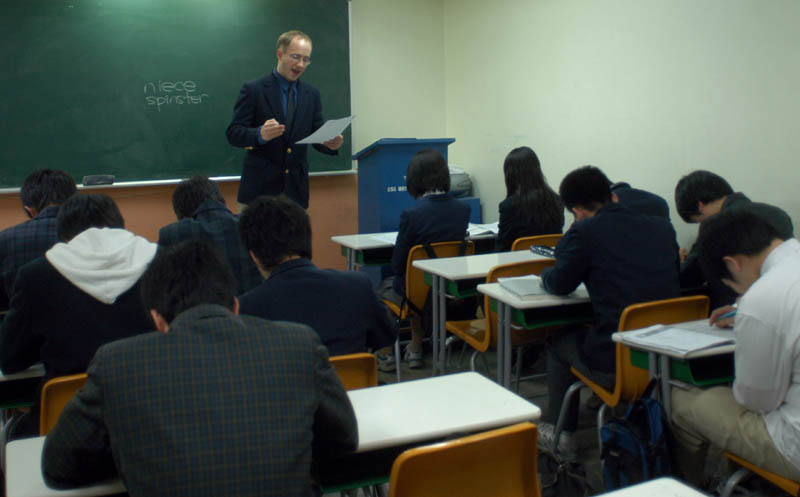


A sharp observer will notcie how cowed and seeminly bored the students appear. This was not due to the lesson Mr. Jones was teaching, which was fun and exciting. No, the reason the students have their heads down and appear to be meditating is because Mr. Kim is in the room. In fact, he got up and taught for a few minutes while I took photos.
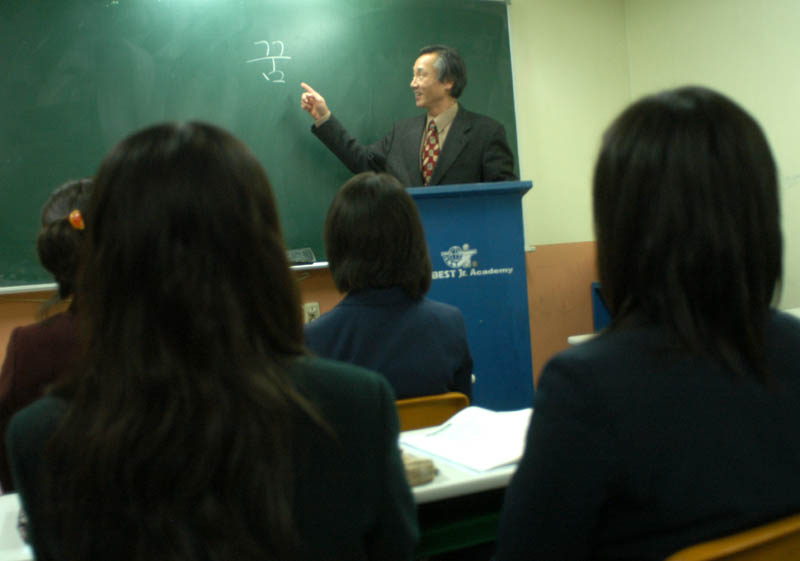


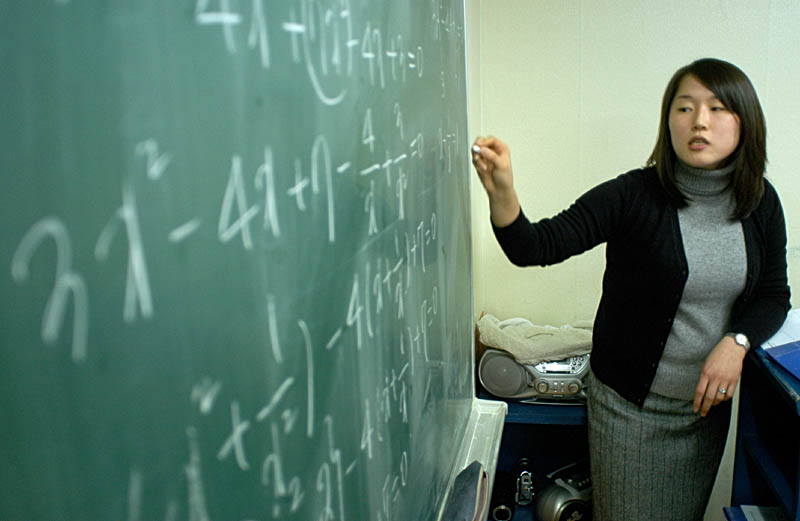
Why was the director of my school in my classroom teaching my students? Because we're putting out an ESS newsletter and Mr. Kim wanted photos of the staff and himself teaching. These photos are by no means to be considered a document of fact, however. Almost my entire class period was eaten up by the photoshoot. In this next photo we have the recently married Su-jin, teaching algebra (I think).


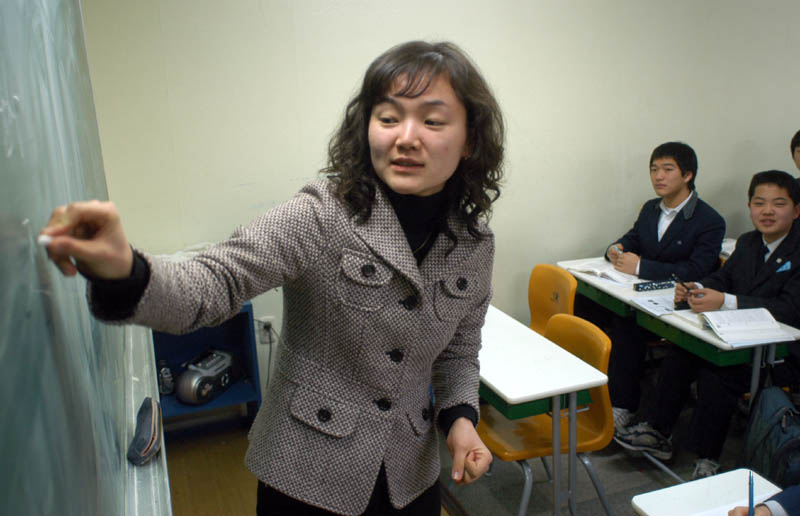
Ms. Kang, Hye-ran got up for the photo op, too, and I dutifully took a few photos of her 'teaching' my class. Actually, it's her class too, and she is much loved by the students.


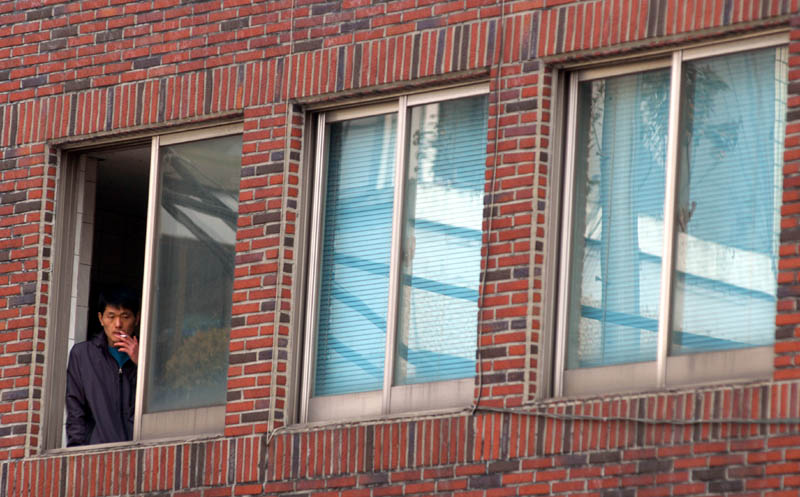
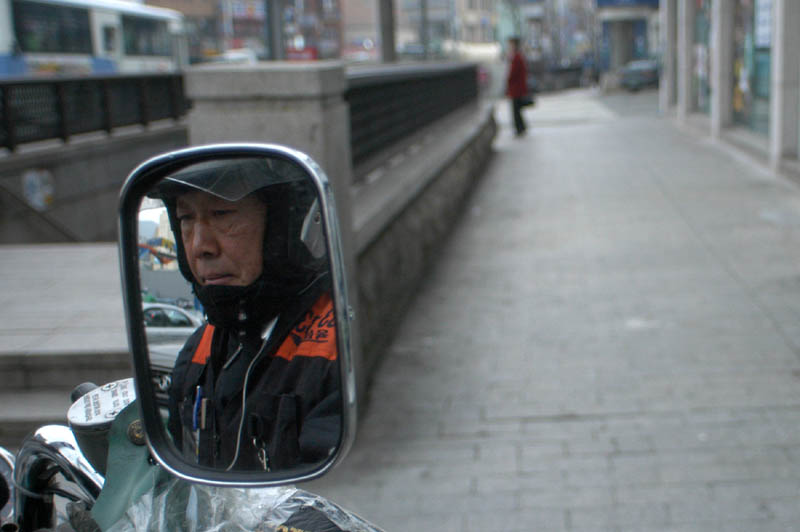
Other than that, I didn't take many photos this week. Here's a snapshot I took of a motorcycle deliveryman taking a smoke break on his bike. I've decided that the motorcycle is the pick-up truck of the Far East. In some cases, that is a literal observation. The entire back end of a motorcycle might actually have a flatbed and two wheels, all of it welded on by some creative mechanic. Very cool. Motorcycles carry everything from fruit and glass to dangerous goods like gasoline and giant pressurized canisters of some sort of flamable gas such as butane.


I also spent some time working with Gavin on another segment in our slowly-evolving video of Busan, and I'll link you to that video just as soon as Gavin gets it cut.

* * *

I was walking to the teacher's office when I came across a boy from TA named Sang-hyeon standing patiently by the door to the computer room as if waiting for someone. I beckoned him over and tried to make a little conversation with him, part of my New Year's resolution to help the children actually use English to communicate.

'Hello Sang-hyeon, how are you?' I asked.

More often than not, this 'walk-by quiz' strategy catches most students off-guard. Either they are truly unaccustomed to utilizing the English taught to them or they are conditioned to believe that speaking English is an exercise confined to the classroom in the same way lifting weights is confined to a gym.

Sang-hyeon is one of the smarter children in the school. He is a quiet, thoughtful boy with thick, black-rimmed glasses that give his face a severe, over-serious look all the more accentuated by his aforementioned self-possessed disposition. When the rest of his classmates are shouting, out of their seats and being disrespectful, Sang-hyeon alone sits calmly at his desk, eyes fixed on the teacher, an island of tranquility in a sea of chaos. He is taller than all but the girls in his sixth-grade class, and the other children tease him for being so tall and so cool. They’ve labeled him 'The Monk.'

'Excuse me teacher,' said The Monk as he slowly reached around to his backpack and produced a small notepad. As he began thumbing through it I leaned over to take a look at what he had written. To my great astonishment, every line on both the front and back of every single page was covered in English phrases mated to their corresponding Korean translation in Sang-hyeon's perfect handwriting.

I watched as Sang-hyeon's patient finger traced over the Korean, searching for a more creative answer to my inquiry than 'fine, thank you.' Many of the phrases were absolutely ridiculous statements confined to the most specific of conversations, such as 'It's cod' and 'My body is clean.' I noticed the thickness of the notepad and the determined, methodical nature of Sang-hyeon's search and I realized that I didn't have the time to engage The Monk in the complex dialogue he was searching for. I had to be in my next class in five minutes.

It hurt to do it, but I had to disengage from the conversation I had started with Sang-hyeon. The boy looked more confused than anything else as I apologized, grabbed my books and hurried down the stairs. As I walked to class, I prayed he didn't take my sudden loss of interest the wrong way. For a child teased for his seriousness and attention to detail, such behavior from a teacher could only give courage to any creeping sense of self-doubt brought on by the jeers of his simple-minded classmates.


* * *

I met In-hye for our weekly Korean lesson on Sunday morning. The previous weekend one or both of us got our times mixed up and we ended up leapfrogging one another at the rendezvous point just outside of the gate of Goshin University. In-hye arrived at 10AM, waited for twenty-five minutes, and then left when I didn’t show. Five minutes later I arrived and sat around for a half-hour waiting for In-hye.

The lesson went well enough. We both broke out our respective laptops and traded notes on Korean and English. In-hye, who can converse in her second language, discussed the latest disaster to strike South Asia - the mudslides in the Philippines. She was amazed by the outrageous number of dead and asked me if I knew what caused mudslides. I pulled out my notepad and pen and illustrated how the dirt on a mountain, if deprived of the plants and trees that hold it in place, can become bloated with rainwater and slide off of the bedrock. In-hye picked up all sorts of new, handy vocabulary such as ‘coefficient of friction,’ ‘supersaturate’ and ‘denuded.’

In-hye taught me how to ask for, tell and mark time in Korean. This is very useful to me. Time plays such a big role in my life that I am sure I will easily remember and begin utilizing what I learned. A language is hard to learn unless you use it, and believe it or not, there is little opportunity to use Korean in Korea. Most of the Koreans that I regularly interact with speak English, and many of the shopkeepers, salespeople, taxi-drivers and other incidental players in my life don't have the time or patience to try and hash out the vaguely-Hangul sounding dribble spilling from my big English lips.

Every now and then a stranger will take the time and listen as I try a new phrase or attempt to conjugate a verb. After a few garbled repetitions, most people laugh good-naturedly and wave their hand at me. "Mula," they say and smile. Sometimes I get lucky and the person will understand what I am trying to say and then help me to say it correctly. This is a rare gift, and I usually hang on to the new phrase or knowledge imparted to me by these goodhearted native (Korean) speakers to use in my daily life.

Gavin remarked earlier this week that I appear to have a very big vocabulary. I thanked him, but countered that my vocabulary is limited to dining and teaching. I can order, describe and comment on food with ease; and I can now direct my class to be quiet, pay attention and form a complete sentence - all in Korean. But outside of that and asking if I can take someone's picture, the Korean language is still a vast, colorful sea upon which I float with a pair of fins, a snorkel set and In-hye.

* * *

I got sick again. God knows how. Gavin lectures me on snacking on the dokpokki and pajun, hinting that the "communal feeding troughs" run by the friendly old ajummas in the busy alley behind ESS are like mini pathogen swap-meets. There are five or six stands roughly equivalent to hotdog stands back in the States, and they serve a limited variety of greasy, spicy snacks from the griddle or from steam-heated cauldrons to customers huddled around the stand with chopsticks in their gloved-hands.

He might have a point, I thought as a virus ravaged my body for most of the week. My skin grew pale, my upper-respiratory tract clogged up and at night I would wake up with chills and a terrible fever. Thursday night in particular was extraordinarily horrible. I woke up with a fever so severe that no matter how much I bundled up I couldn't get warm and my body shook and trembled so violently that in the morning my legs and back felt sore like I had run a ten-kilometer race. Throughout the night I tried to stay good-humored about the ordeal, in part because deep-down I believe that if I can have a sense of humor about something, it probably isn't all that serious.

"Man the lines, men! We can't afford to let one of those bastards in here!" I said, trying to bolster morale among an immune system not used to the constant warfare of the last five months living and teaching abroad. I thought of Gandalf in the third Lord of The Rings installment. "You are white-blood cells of Stephen Jones. No matter what comes through that sinus cavity, you WILL STAND YOUR GROUND!"

Another bout of uncontrollable shivering rocked my body, and I curled into a ball and whimpered, imagining the shaking to be from the army of ugly, malignant pathogens charging headlong into the silver spears and flashing steel swords of my valiant one-celled army.

"Send these foul beasts back into the ABYSS!"

During my darkest hours, when all hope seemed lost, I considered rousing Gavin and calling an ambulance. However, central command always vetoed this 'nuclear option,' opting instead to rely on my youth and health to pull me through the night, to fight to the last antibody. Too expensive, I thought, as Korean healthcare only covers half of the bill. Too risky, I figured, what with the language barrier and all, I could arrive with the flu and leave without my spleen. To much trouble, I reasoned, thinking about Gavin sleeping peacefully in the room next to mine. Oh, and I never bothered to learn the Korean equivalent to 911. Quite simply, I CAN'T call an ambulance!

With the help of tylenol, I lived to see morning. By Saturday the virus had been beaten back into the fiery pit of dokpokki from whence it came. I sadly had to add the food served at the stands to the growing list of things not to take into my body, right up there with soju and the parasite-bearing flatfish Dennis warned me about on my fourth night in Korea.

Sunday, February 12, 2006

OK, I know you’ve all been breathlessly awaiting the next installment of SoKoNotes, so I won’t dally (I’m saving that for later). Prepare your brain, because here comes another installment of wacky Konglish nonsense. Strait from the grimy streets of Busan come more of your favorite bizarre logos, slogans and adspeak raw, uncut and completely without regard for proper English grammar: The Korean Files!

"The Semitol Leeching" --The first leeching performed at the capitol by Seminole indians. Key chain.

"Dino Divinchi Outlet" --All the dinosaurs and oil paintings at the rock-bottom prices you demand. Storefront.

"Hamster Club" --With new, circular treadmills and fun plastic tubes to crawl through. Jacket.

"Toz Toz Toast Shop" --Are there really lucid, fully-ambulatory people out there who can’t operate a toaster? Storefront.

"Yogurt Kiss Garden" --Sounds like mushy stuff. Baskin Robbins storefront.

"Dual Incredible Park" --Believe it or not, this is a flavor of icecream cake. Same Baskin Robbins.

"Manufactured and made Authentic" ...By adding someone else’s logo to ordinary jeans... Sweatshirt.

"A beautiful coast town with dream and romance" --But no articles and everything is singular. Young-do beach front.

I have quite a bit to say, but I’ll save that for the REALLY dedicated SoKoNotes readers. For all you who just want to see all the ‘pickies,’ here they are, all fifteen of them, with commentary.

In-hye skipped out on our weekly English/Korean co-lesson, so I took a long walk along the waterfront on the southern side of Young-do island. The sun was near its zenith and the light was steeply angled, creating cold inky shadows. All available commercial space was crowded with machine shops, welding shops and other stores dedicated to the construction and repair of oceangoing ships. Weathered men in grease-streaked blue coveralls fussed over all manner of boat parts with TIG welders, drills and hammers. Their endless, friendly chatter filled mixed with the sharp sounds of metal striking metal and the steady hiss and crack of welding torches. Most of these worker bees didn't care to have their picture made, still, I persisted and got a few nice frames.


Facing the shops were ships of all shapes and sizes in various states of disrepair resting high and dry on giant rubber blocks. Most of these vessels appeared to be very old. The rusty steel skin on one of the barges was so old and thin that it had bent around the ship's ribs, giving the vessel the appearence of a mangy, starving dog. My inner ten-year-old gawked at the giant brass propellers, drive shafts and diesel blocks basking in the hard sunlight. Point. Click. Walk.


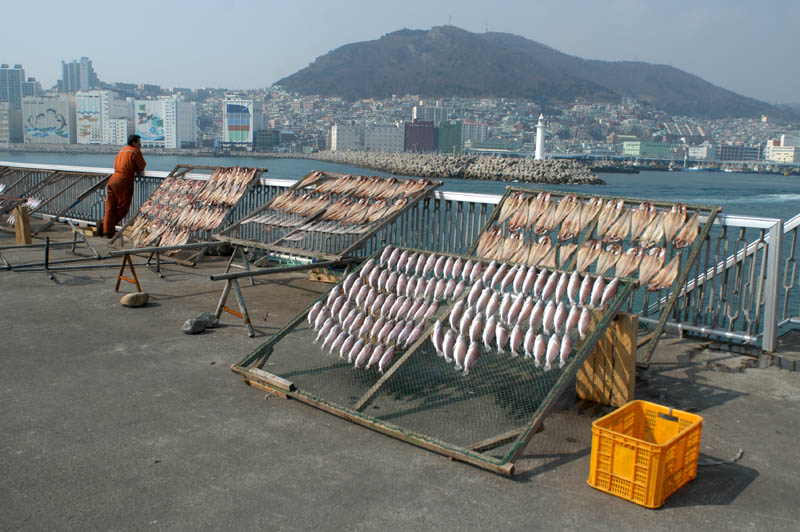
Other guys fished. With so many people fishing in Busan, I'm surprised there are any fish left in the harbor whatsoever. Every coast I visit is usually lined with people drinking window cleaner, er...Soju, and luring sea creatures with bits of shrimp.


There is a huge seawall that protects the nearby apartment buildings from the sea.


I like to joke with Gavin that one or both of us is going to meet the right girl here and in ten years that'll be us sitting on that rock with a pole in our hand teaching our son or daughter how to skin an eel. It does happen, you know. Just ask Noel.

Gavin and I met Noel, a native of Australia, while attending Hangul Seodang. Easily six feet tall or taller and built like a rugby player, Noel has been in Busan four years. He met and married a Korean a year or so back.

Noel invited us out to a Dong Dong Ju Friday night, and we accepted the invitation. He and almost a half-dozen of his friends joined us at the creepy Beomil-dong station for the long walk to the bar.


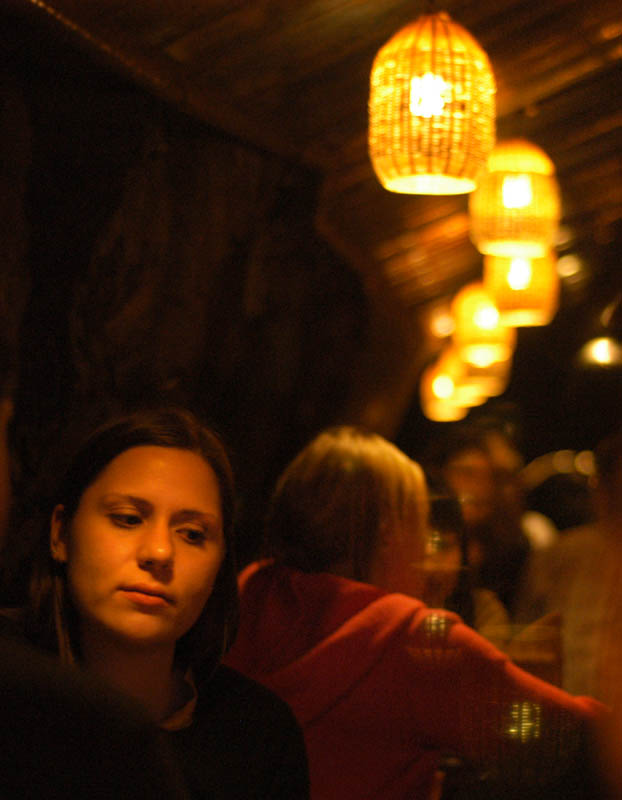
A Dong Dong Ju is a traditional Korean bar specializing in Makali, a form of rice wine. Like all places in Busan where foreigners take me, it's usually full of - surprise!- other foreigners. The bar itself appeared to have been hewn from the bare rock of the mountainside on which it was located. It was dank, dark and eerily lit with Christmas lights and low-wattage Chinese lamps. Every surface, from the tables to the chairs, was made of solid rock, and every surface save the tables and chairs was covered in a slick layer of water. My general impression was of descending into a castle in Mordor from The Lord of The Rings. Through the fog of Makali, I somehow popped a few frames.


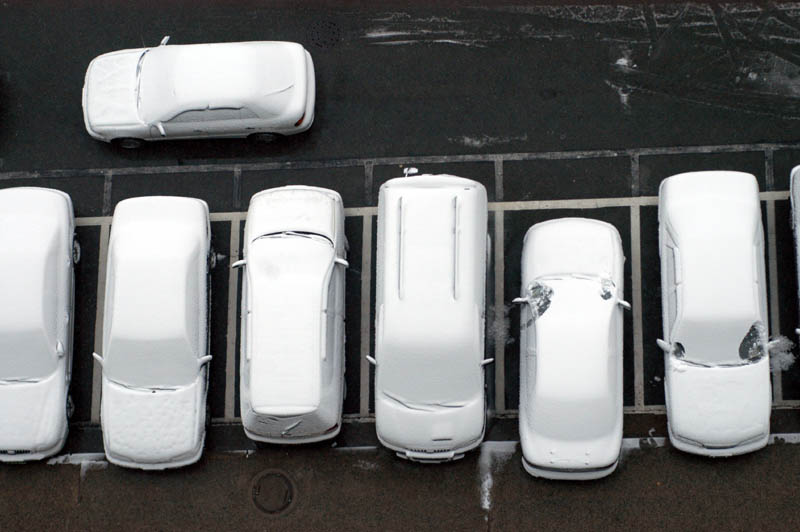
When it rains, it pours, and sometimes it outright snows. On Monday we got three inches of snow. It wasn't enough to cancel classes, but it made for a decent photo.


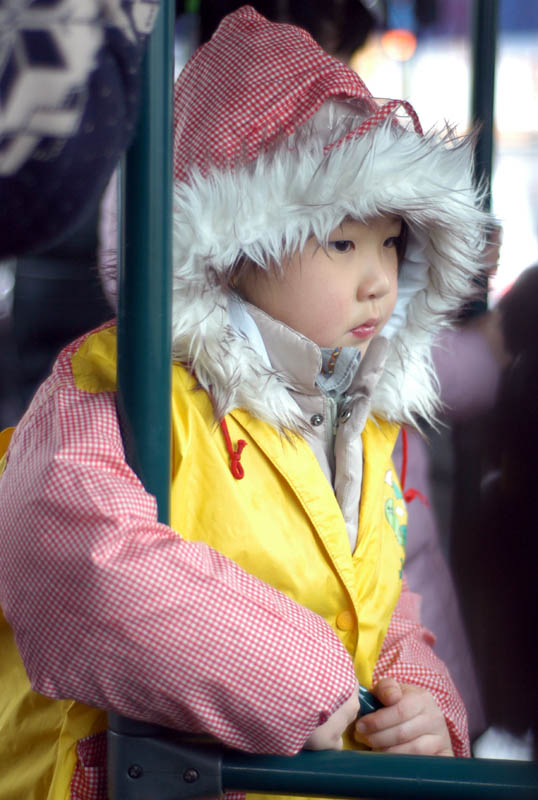
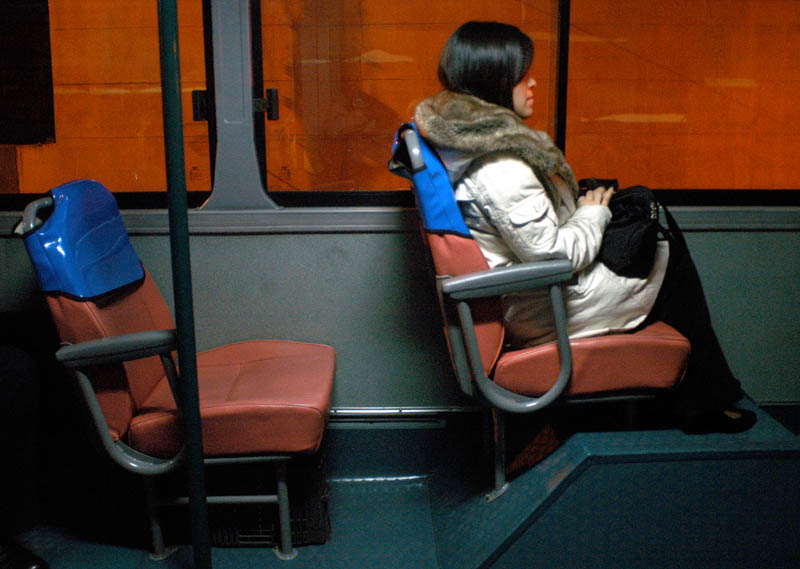
People bundled up against the wet, cold weather. The windows of the bus fogged up and filtered the crystalline light streaming off of the snow, effectively turning the 88-1 into a perfect softbox.


I enjoy shooting on the bus, anyway. The light coming from the near daylight-balanced florescent lights is very dramatic, and when combined with the colored light from outside the bus, makes for good photos.


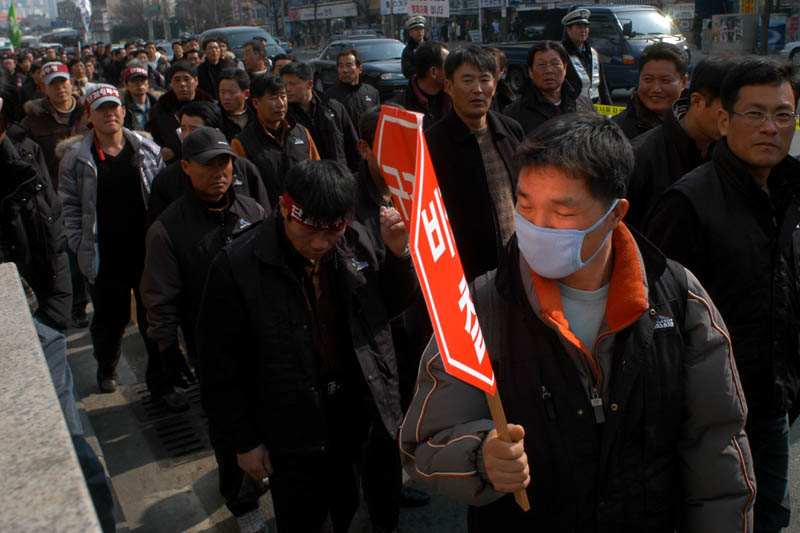
There was a march or protest concerning the police in Nampo-dong on Saturday. People with black clothes and red stop signs walked from Busan Station through Nampo-dong. They didn't seem to mind me taking photos, which is about all the documenting that I can do because of the language barrier.


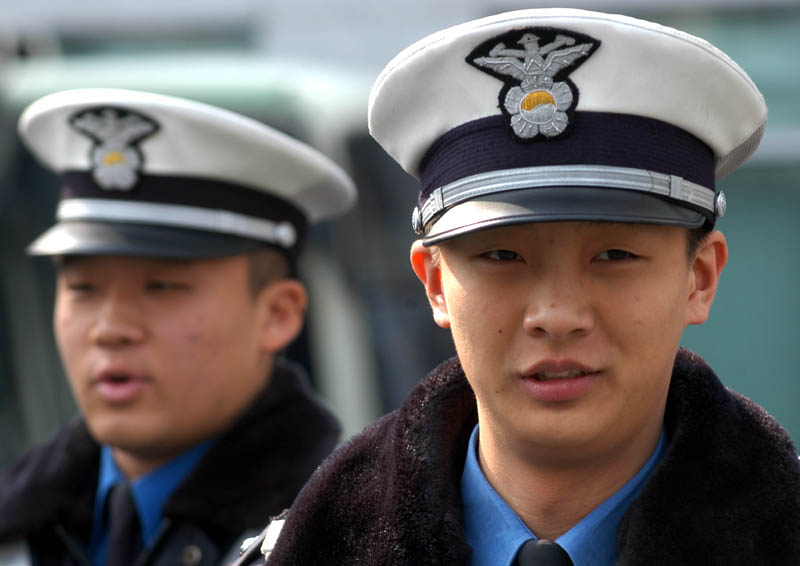
It amazes me how young their police officers appear. Long lines of the fresh-faced youth protected the marchers from traffic.


OK, and now for the ESS report. We have a new Korean teacher named Na-ri. She replaced In-hye a couple of weeks ago. When a new teacher joins ESS, they usually get the lowest level classes: The B's, G's, TE's and E2's. These kids tend to be in a bad way either in terms of linguistics, behavior, or both. I shared a lot of these classes with In-hye, and we struggled to focus the students on learning. Two weeks with Na-ri and it's like I've been teaching different classes. 5P, which had been once been nearly unteachable, is now so calm and collected it's like they're bipolar.

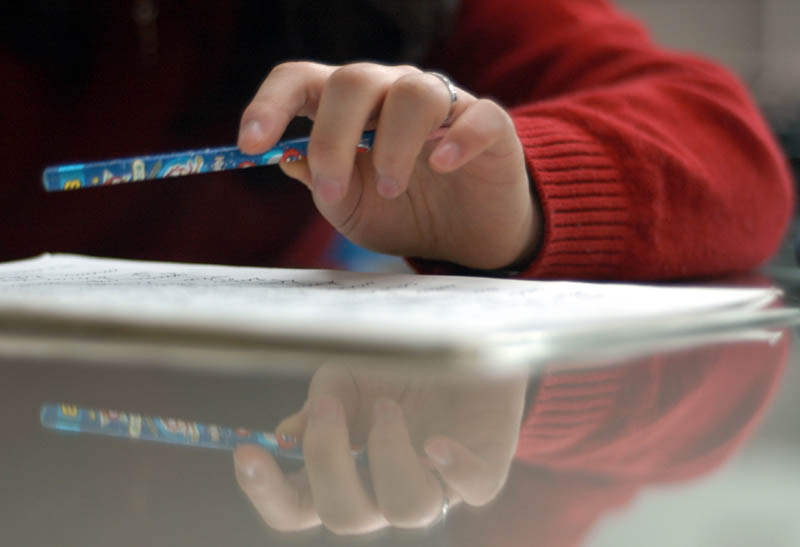
Na-ri has a gentle, no-nonsense attitude, and she seems genuinely interested in teaching the children English. I came into the teacher's office Friday to see her tutoring a boy who knew absolutely no English; and what stood out the most was her small, delicate hand gliding over the sheet of characters to the gentle, patient sound of her voice.


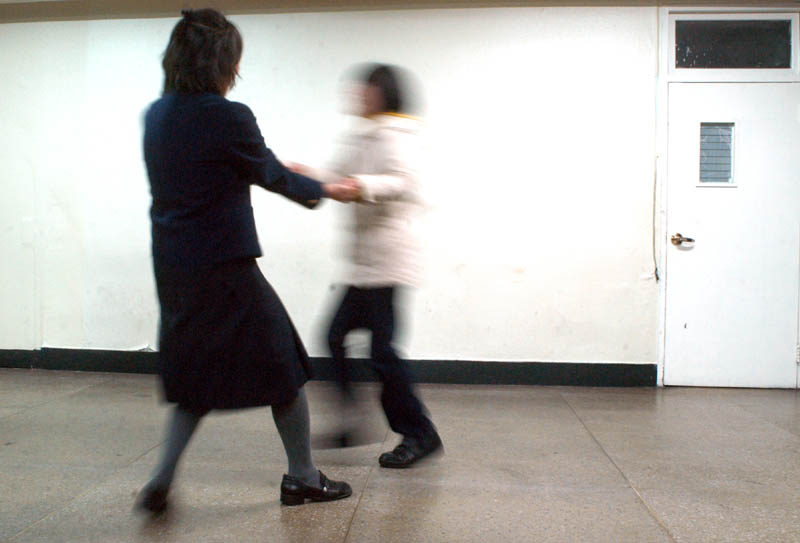
The play rehearsals are getting longer and more complex. Mr. Kim has brought in a dance instructor and two musical directors - a traditional Korean instruments instructor and a coordinator (Mr. Kim's daughter) - to back up Lois, his main director. The simple, second-grade level play is being transformed into a broadway musical. What's worse: Mr. Kim is micromanaging the entire thing down to the way I sweep my hand as I create 'plants,' which brings us to Hong-gi.

Poor Hong-gi. He's tall. He's pudgy. He just recently started learning English, and he got cast as "Dry Land," one of the more difficult parts in the play. The complexity of his part is not due to his lines, which are ludicrously simple. I memorized them during the hour I spent teaching him to speak them today. At one point, Hong-gi leans towards "Water" and remarks, "You're so...So blue!" His hardest line comes after I create the Sun. Hong-gi pretends to put on shades and says, "I think I just invented sunbathing!"

No, the difficulty in any of these parts is wholly due to the haphazard production of the play. When I came into ESS today, Soo-hee told me to spend an hour with Hong-gi. "He needs a lot of help," she said. "How should he deliver his lines?" I asked. Soo-hee shrugged and told me to basically teach him the way I see fit. So for an hour I taught Hong-gi to deliver his lines in the slow, measured, wise intonation that I imagined "Land" would have, like a Buddhist monk. I figured it would balance well against "Water," played by a girl who frolics on stage with a long blue ribbon and speaks her lines in a high-energy, carefree manner.

Hong-gi was very excited as we took the stage today for rehearsal. We had not only worked out his pronunciation and intonation, we had designed a "Dry Land" style of walk. However, Hong-gi hadn't spoken five words before both Mr. Kim and the director all but tackled him and told him to stop. No, they told him, that was NOT how "Dry Land" was to act. Hong-gi turned a confused, helpless look on me that said, "Mr. Jones, what's going on?"

I had no idea. No one had bothered to tell me, Hong-gi or Soo-hee how "Dry Land" should be acted. I had taught him the way I would have acted the part, and this was far from correct. Mr. Kim suddenly began goose-stepping around like a soldier, arms crossed, looking serious. This was the way he wanted it done. The director agreed, and then both Mr. Kim and his director turned and looked at me as if I was in on there plan the whole time.

I then had to spend the next half-hour teaching first myself and then Hong-gi how to walk, talk and act the way Mr. Kim and the director desired. It was a massive waste of time, but that seems to be the rule and not the exception in this play. Despite my accidental betrayal of Hong-gi, the good-natured boy was all smiles and jokes as he, I, and the other players walked to a restaurant for noodles during a break in rehearsal.

After five hours of rehearsal, we had only covered four scenes in the eight-scene play. Compounding our inefficiency is the lack of scripted blocking. Blocking, for all of you who don't know, is how and where an actor relates to both the audience and his fellow players while delivering his or her lines. It includes how you enter the stage, where, how and when you go as well as your body language and coordination with the other actors. Mr. Kim and our director are doing all of their blocking on the fly, and their constant back-and-forth tweaking eats time and distracts the students. I'm not sure if this is how it's done in a professional theater, or if someone 'blocks' a play long before the scripts are handed out, but it sure makes for a slow rehearsal. There isn't time to do much more than wait for your line and take photos.


Well, that about does it for this week. I had plans to talk about all of this personal stuff, but I'm beat and it's probably not wise anyway, so I won't...At least for now. For all of you back in TV Land, thanks for putting down the remote for a few minutes and reading this quality blog. Our TV hasn't worked in months, and that's fine with me. Gavin and I keep trying to rally each other to the cause of acquiring a new TV, but somehow we always find something better to do with our time, like work on building our websites or exploring the city. Peace. --Notes

Thursday, February 09, 2006

Alright, here it is, the first video clip from Korea! Gavin came up with the concept while charging his bus card in the Nampo-dong train station. He was innocently charging his card, hit a button, and suddenly the screen filled with these random pictures of a mountainside being dynamited! He and I came up with a number of shots documenting this very "Lost in Translation" moment and shot it over the course of five days with my video camera. The resulting clip can be downloaded and viewed at the following URL. Enjoy! --Notes

http://homepage.mac.com/gavinaverill1/iMovieTheater8.html

Tuesday, February 07, 2006

I am truly sorry for not updating sooner. The last six weeks has eaten up not just my energy, but my time as well. I never truly appreciated the slavery of a nine-to-five shift until I had to teach by one for an extended period of time. My life went from splitting my waking hours between teaching and living to revolving around teaching almost exclusivly. I would wake up early, work all day, and by the time I had made it home I was too exhausted to even think about things like uploading images or boiling down my thoughts for the blog. I look back at the past six weeks with wonder: I can't believe I updated at all.

Here are a few photos from the last week.

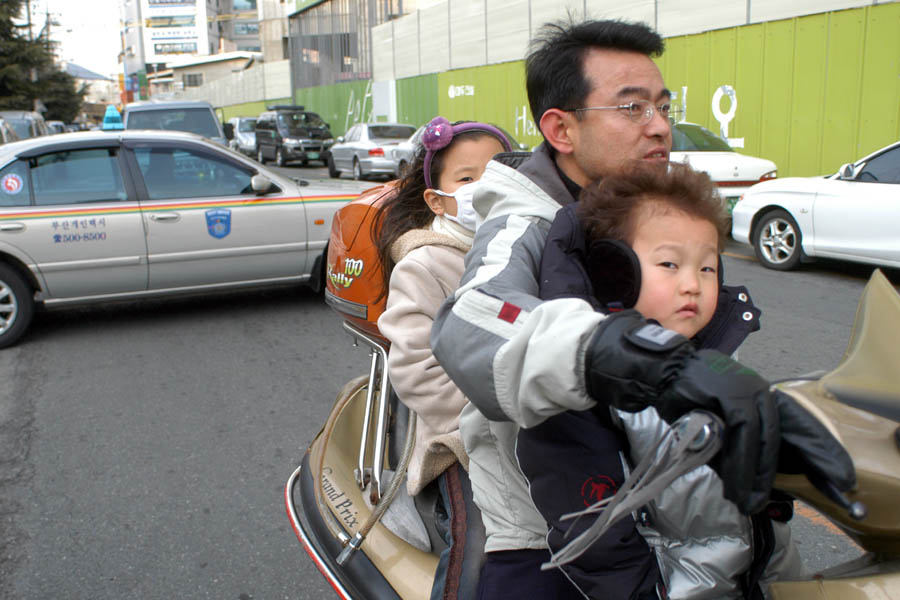
Helmets? Who needs helmets? Helmets are for little girly men (and their girly children).


What is truly odd about the above photo is how much Koreans seem to care about foreigners and helmet usuage. In the early days of my stay in Korea (I've only been here five months, so that's not too long ago), I rode for a little while on the back of Julie's motorcycle without a helmet. Yes, I know, that was fantastically stupid, especially when one considers how bad the driving is in Busan. No one pointed out my apparent deathwish with greater fervor than the Koreans themselves. It seemed like the driver or passenger (or both) in the cars and taxis that passed by Julie and I would be waving frantically and pointing at their heads.

"Helmut-uh! Helmet-uh!"

Julie's friend Robin got her helmet from a taxi driver. When they pulled up to a red light, he leapt from his cab, ran around to the trunk and pulled out a beat-up white construction helmet for her to wear. Satisfied, the good samaritan jumped back into the driver's seat of his taxi and returned to cutting people off, speeding, tailgating and generally endangering the lives of all those around him, helmet or no helmet.

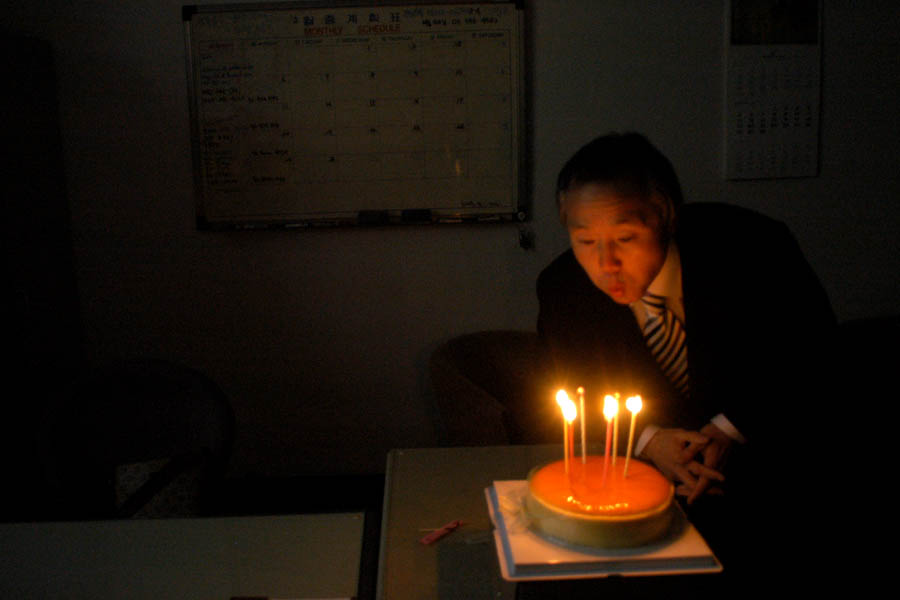
Mr. Kim had a birthday. I didn't catch how old he turned, but he's been with the school since it's founding in the early 1960s. That's a lot of water under the bridge.


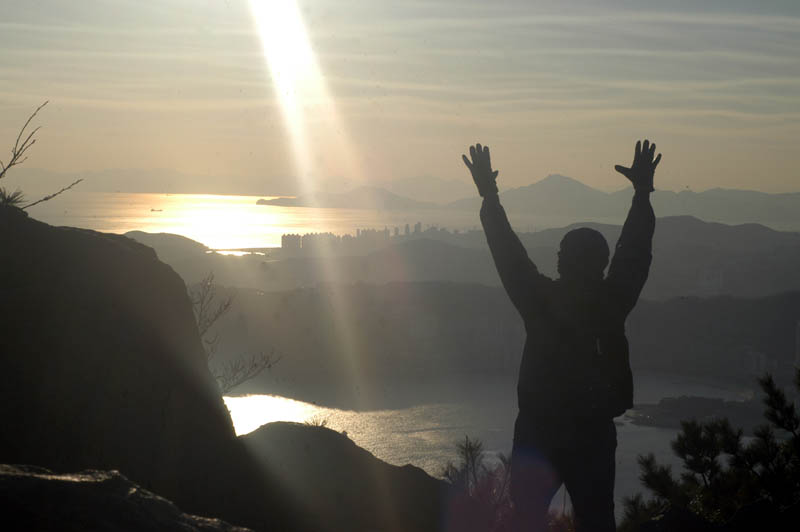
I finally got a free hour this past weekend and climbed Bongnaesan. It was a beautiful day, so clear you could see the outlying islands of Japan. I was gearing up to let loose a few 'primal screams' when this guy showed up. That's lens flare coming in from the left, the result of a cheesy Tiffan filter on the front of my 50mm. It kind of works, though.


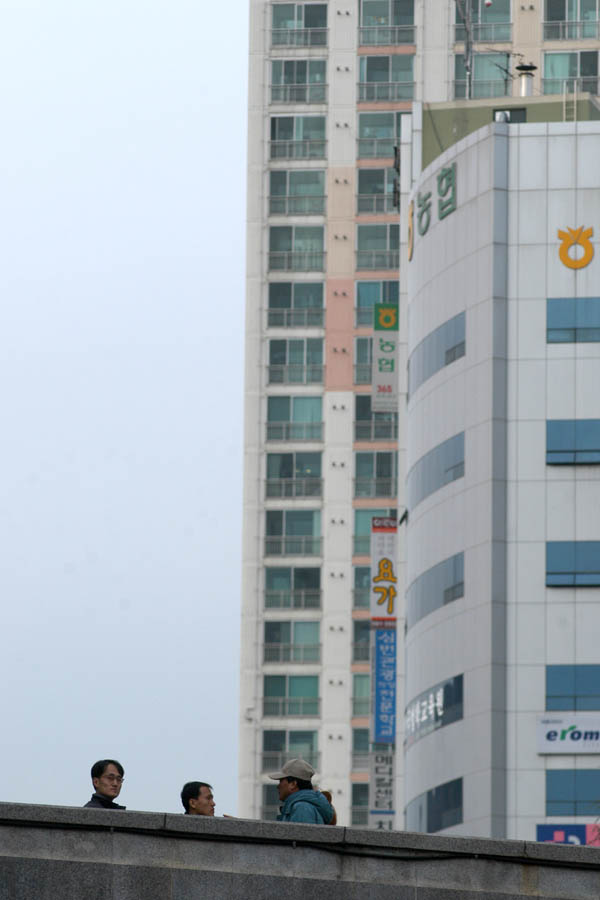
Gavin and I took a trip to PNU for some reason, I forget what. Oh yeah, we went to shoot some footage for a movie on Busan that we are cobbling together. After shooting the footage on the train out to Nopo-dong (which means absolutly zilch to most people reading this), we set course for nowhere and ended up in PNU. Gavin and I have similar wandering habits: Set a general course, get distracted, wander off course, get distracted again, drink coffee, try to set a course again.

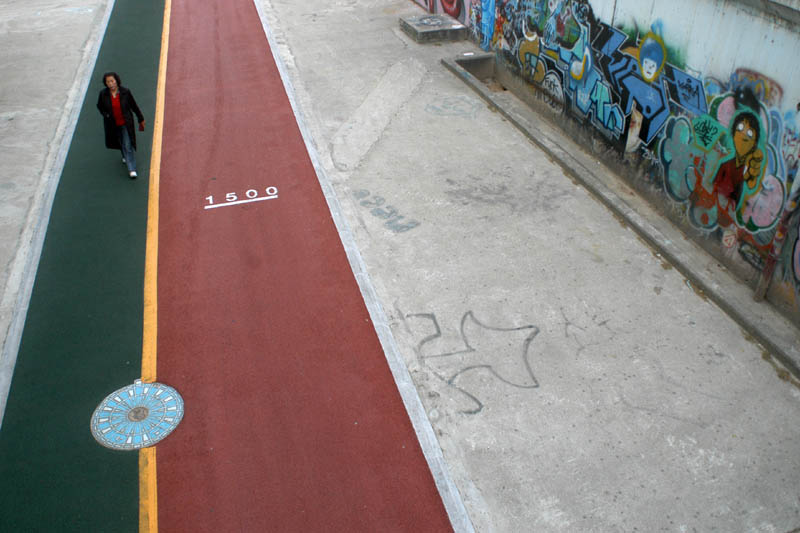
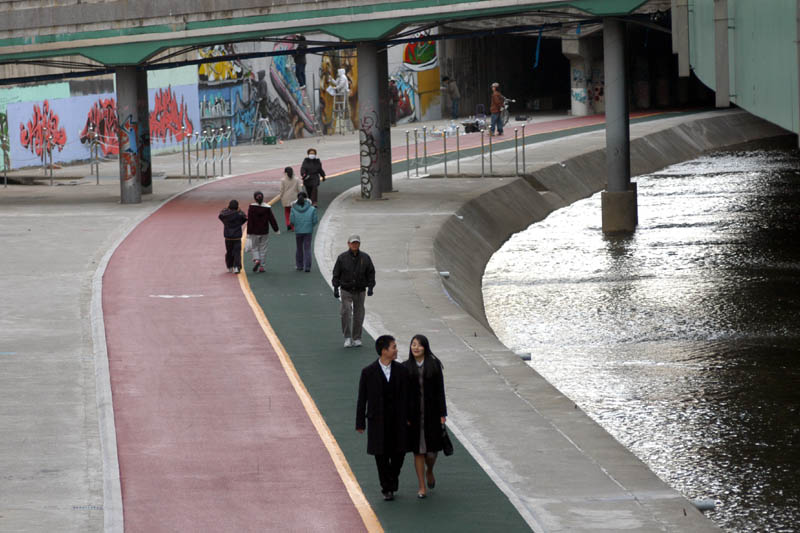
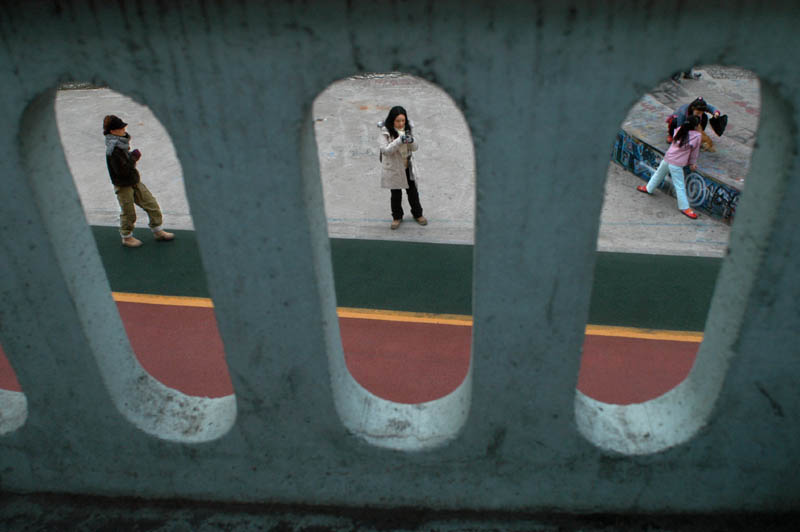
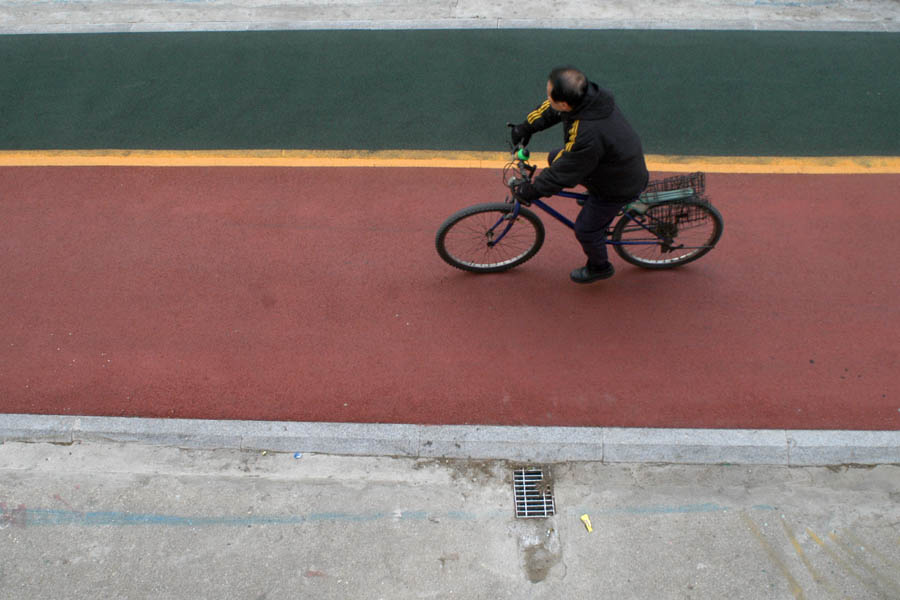
There isn't a lot to see here past the PC Bongs and Hofs. In PNU (Pusan National University), there is a nice running track that follows a massive drainage culvert parallel to the raised subway tracks. The buildings of PNU rise high above the little bridges and roads that cross the concrete creek. People travel the rubber footpath by foot or by wheel. It's pleasant.


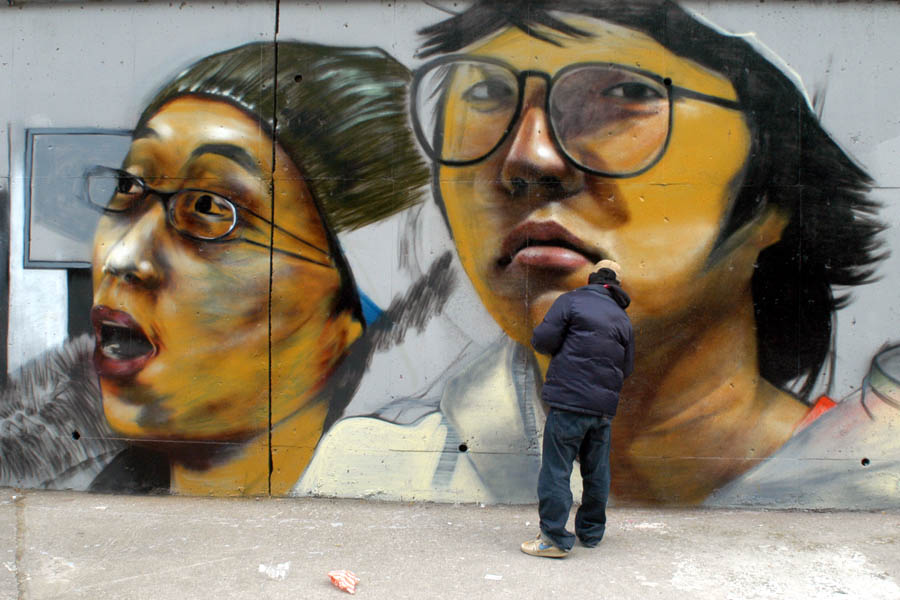
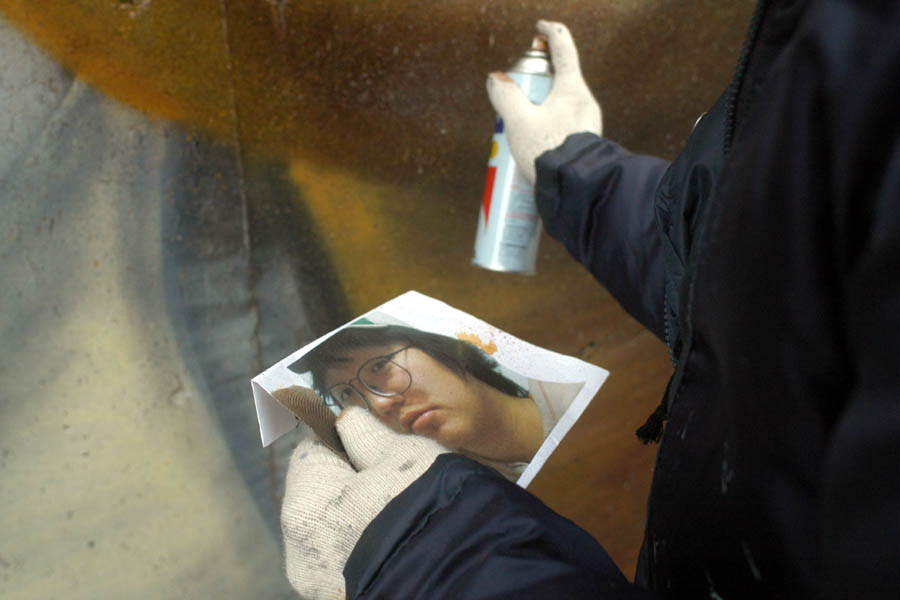
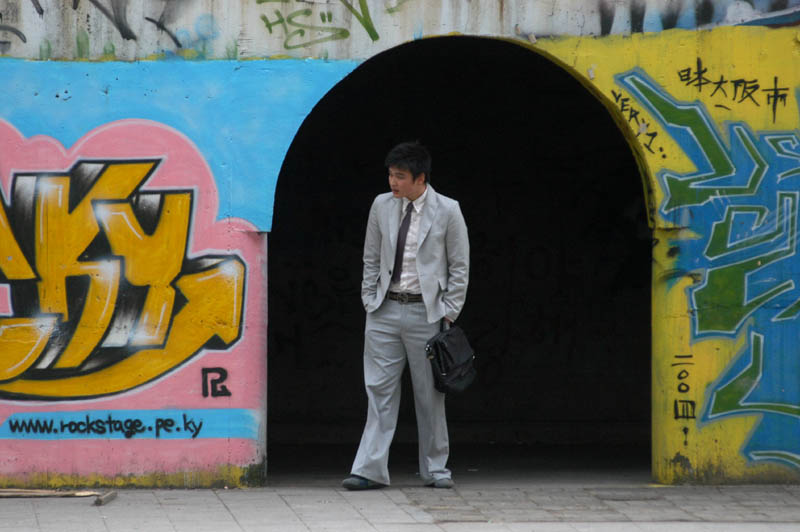
Other folks turn the cold concrete walls into works of art with spraypaint. I think the government sanctions the projects, because the graffiti artists didn't seem the slightest bit unnerved by my camera or Gavin's inquizativness.


As you can tell, I didn't have a lot to say this past week. I'm saving the Korean files for next week, and I have a bunch more photos of the play rehearsals, but I'm going to wait until I have a little more energy and a bit more to say before I update again. Have a good night (or morning)! --Notes

PS--I have to make an amendment to last week's update. Kristen majored in Spanish while attending Northeastern University in Chicago. She is considering a speech pathology degree (post-grad). Sorry, K. I hope everything is correct, now. --N